The Algorithm Got the Credit. Your Abuela Did the Work.
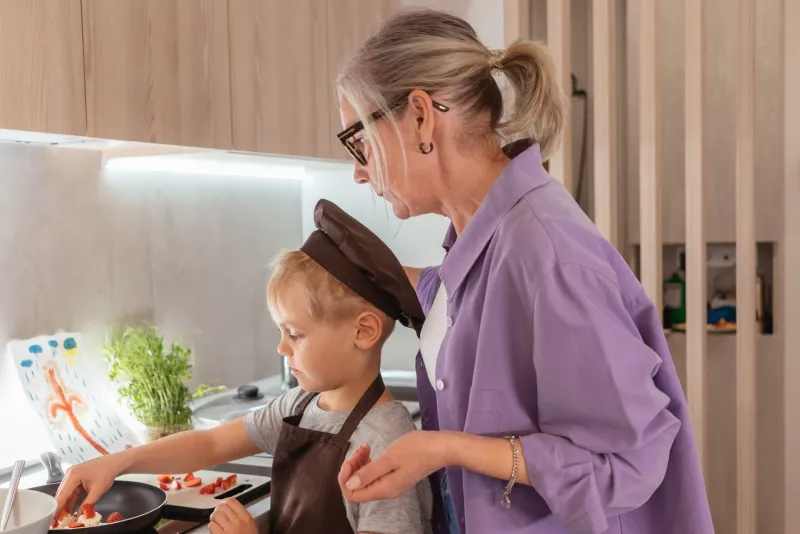
Somewhere in a sun-warmed kitchen in Jamaica, a woman has been slow-cooking oxtail for six hours using a technique her mother taught her, who learned it from hers. No ring light. No 60-second reel. No 4.2 million views. Just time, heat, and knowledge passed down through a lineage most food content will never bother to name.
Meanwhile, on your For You Page, a creator with a spotless kitchen and a perfectly calibrated color grade just posted a video titled "The ONLY Oxtail Recipe You'll Ever Need" — and it has 800,000 likes by Tuesday morning.
This is not a coincidence. It's a pattern.
The Technique Has Always Existed. The Credit Hasn't.
Let's be real about what's happening in the food content ecosystem right now. Viral cooking videos are thriving — and a significant number of them are built on the back of techniques that come directly from African, Caribbean, South Asian, and East Asian home cooking traditions. Slow fermentation. Dry rubs with spice blends that trace back to West Africa. Braising methods rooted in Cantonese cuisine. Dumpling-folding styles that Sichuan grandmothers have been doing since before "meal prep" was a hashtag.
The techniques themselves aren't the problem. Sharing food knowledge across cultures is genuinely beautiful — it's how cuisines evolve, how communities connect, how a dish from one side of the world ends up nourishing someone on the other. The problem is the erasure that happens in translation.
When a white creator in Austin posts a video of "the most flavorful rice you'll ever make" using a method that every Nigerian household has been doing for decades — and that video goes viral while the people who originated it remain invisible — something is being taken. It's not just credit. It's cultural labor. It's the invisible intellectual property of generations of home cooks who never had the platform, the production budget, or the algorithmic advantage to tell their own story.
Real Examples, Real Stakes
This isn't abstract. Consider the explosion of "smash burgers" — a technique that, while American in branding, draws heavily from diner-style griddle cooking long practiced in Black-owned food spaces. Or the viral "crispy rice" trend that swept TikTok in 2021, which bore a striking resemblance to Persian tahdig — a dish Iranian home cooks had been making for centuries, largely without Western acknowledgment until a food influencer with the right aesthetics packaged it for a new audience.
Or look at what happened with berbere spice blends. Ethiopian cuisine has used berbere — a complex, layered spice mix — as a cornerstone of its culinary identity for generations. When Western food brands started selling "exotic spice blends" with similar flavor profiles and zero mention of Ethiopia, the community noticed. The food content world largely did not.
The Caribbean culinary community has been particularly vocal about this. Jerk seasoning. Curry goat. Ackee preparation. These aren't "inspired by" dishes — they are rooted, specific, culturally significant techniques that get flattened into "bold flavors" content without a single mention of where they came from or who developed them.
Why Creators Don't Credit — And Why That Excuse Is Wearing Thin
Ask most viral food creators why they don't source their techniques, and you'll get a few recurring answers. "I just learned it from cooking." "I didn't know where it came from." "I'm not claiming to have invented it."
Here's the thing: not claiming to have invented something is not the same as acknowledging who did. And "I didn't know" is increasingly hard to defend in a world where the information is a Google search away — especially when the creator has clearly done enough research to make the dish convincingly.
There's also a more uncomfortable dynamic at play. Algorithms reward confidence and polish. A creator who says "this is my take on a Ghanaian technique called kontomire stew" is doing something culturally responsible — but they're also adding friction to the content, asking the viewer to hold more context. Many creators, consciously or not, strip that context out because it slows the scroll. The result is that the knowledge travels but the origin doesn't.
The Creators Who Are Doing It Right
This isn't a story without counterexamples. There are creators — many of them from the very communities being discussed — who are actively working to reclaim the narrative.
Creators like Rahanna Bisseret Martinez, who centers Black culinary history in her content, or the wave of Nigerian, Ghanaian, and Trinidadian food creators who are explicitly naming their traditions and building audiences around cultural specificity rather than in spite of it. These creators aren't just making food videos. They're doing preservation work. Documentation. Cultural archiving in the format of a recipe reel.
And their audiences are responding. There is a growing segment of food-curious viewers — many of them Gen Z — who actively want the context. Who will comment asking for the history. Who will call out a creator in the replies for not naming their source. The accountability infrastructure is being built in real time, one comment section at a time.
What It Would Actually Look Like to Do Better
Crediting culinary tradition doesn't require a dissertation. It can be as simple as a caption that says "this technique comes from West African palm nut cooking" or "I learned this from watching Haitian home cooks." It can mean tagging or amplifying creators from the originating community. It can mean turning a viral moment into a door — pointing your audience toward the source rather than presenting yourself as the source.
It also means being honest about the privilege baked into the food content ecosystem. A creator with lighter skin, a neutral accent, and a kitchen that reads as aspirationally American has structural advantages that have nothing to do with culinary skill. Acknowledging that doesn't diminish the content. It makes it honest.
Your grandmother's technique deserves to be named. The algorithm doesn't get to be her heir.