Bollywood Hair, Unfiltered: Why the Most Liberating Beauty Content Right Now Is Coming From India
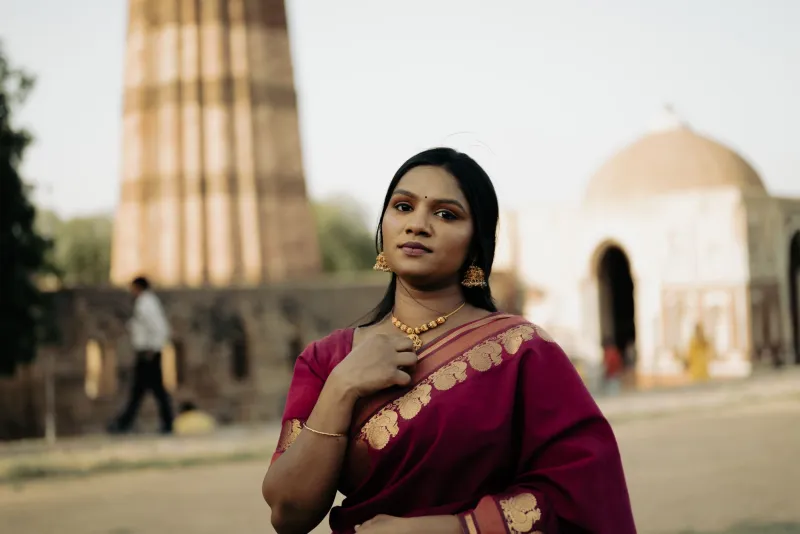
There's a specific kind of video that's been quietly accumulating saves on TikTok and Instagram Reels for the past year or so. It doesn't have ring lights or a minimalist backdrop. The audio is often slightly imperfect. The person on screen might be sitting on a bed with a ceiling fan visible in the corner, rubbing oil through their hair with the kind of unhurried confidence that suggests they have absolutely nothing to prove to you.
These videos are coming largely from Indian creators — some connected to Bollywood aesthetics, some just documenting real home beauty rituals — and they are doing something that a significant portion of Western beauty content has failed to do for years: they're making people feel okay about what they actually look like.
The Perfection Problem We Didn't Notice We Had
For a stretch of time that felt like forever but was really about five years, "clean" was the dominant aesthetic in American wellness and beauty culture. Clean girl makeup. Clean skincare. Minimalist routines. Glass skin. The aspiration was essentially to look like you had no pores, no texture, and no particular cultural origin — a smooth, dewy, neutral-toned ideal that was technically achievable by anyone but in practice centered very specific features.
K-beauty gets credited — or blamed, depending on who you ask — for kicking this off in the West. And while Korean skincare introduced genuinely excellent products and philosophies to American consumers, the aesthetic that Western audiences latched onto was often stripped of its cultural specificity. What remained was a kind of universal pursuit of flawlessness that felt aspirational but also, increasingly, exhausting.
Gen Z noticed. They're the ones who started saying out loud that the "no-makeup makeup" look requires more products and effort than just wearing actual makeup. They're the ones who pushed back on the idea that skincare should be indistinguishable from a medical procedure. They were ready for something different.
Enter the Oiled Braid and the Undone Wave
Indian beauty content didn't arrive on Western social media with a press release. It spread the way the best things spread — through shares, through saves, through someone watching a video of a creator massaging coconut or castor oil into their scalp and thinking, wait, why have I never done this?
Hair oiling is an ancient practice across South Asia, deeply embedded in both Ayurvedic tradition and everyday domestic life. In Indian households, it's not a spa treatment — it's just what you do on a Sunday. But when it started appearing on Western feeds, it landed differently. Not as an exotic ritual to be appropriated, but as a reminder that caring for your hair didn't have to involve seventeen products and a diffuser attachment and a tutorial with a ring light.
Bollywood has always had a complicated relationship with hair. The industry's most iconic looks — think the voluminous, slightly wild waves of classic Hindi cinema, or the deliberately undone braids that appear in dance sequences — celebrate hair that moves, that has presence, that is unapologetically a lot. This is not the sleek, controlled blowout of American red carpets. It's bigger than that. More textured. More alive.
American Gen Z, a significant portion of whom have hair that has never actually behaved the way beauty tutorials promised it would, are finding this incredibly validating.
The Creator Shift That's Actually Mattering
It's worth being specific about what kind of content is resonating, because not all Indian beauty content is the same. What's cutting through in the US isn't polished Bollywood promotional material — it's creators like those documenting their grandmother's hair care routine, or the person doing a casual reel about why they've stopped heat-styling entirely, or the tutorial that acknowledges frizz as a feature rather than a problem to be solved.
The imperfection is the point. And that's a significant departure from what dominated beauty content even three years ago.
Creators from India are also more likely to talk openly about hair types that Western beauty media has historically treated as difficult or unruly — thick, coarse, curly, and wavy textures that don't respond well to the products and techniques that dominate American beauty aisles. When an Indian creator talks about managing volume or working with natural texture, they're not framing it as damage control. They're framing it as care.
That reframe is landing.
Why "Messy" Is Doing More Cultural Work Than It Looks Like
There's a reason the word "messy" keeps coming up in discussions of this aesthetic, and it's worth unpacking. In American beauty culture, messy has historically been a controlled thing — the "effortless" look that requires significant effort, the undone style that's actually very done. The messiness in Bollywood-adjacent beauty content is different. It's genuinely unpredictable. It's hair that's been oiled and braided and left to do what it wants. It's a bun that's half-fallen out and hasn't been fixed because it still looks good.
This kind of messiness doesn't perform nonchalance — it actually embodies it. And for a generation that has grown up watching influencers perform authenticity while maintaining suspiciously flawless appearances, the real thing hits differently.
There's also something culturally specific happening here that's worth naming. Indian beauty aesthetics, particularly those connected to Bollywood's visual language, have always celebrated femininity as something abundant and expressive rather than restrained. Volume is not excess. Texture is not a flaw. Color and adornment are not too much. These are values that sit in direct contrast to the minimalist, almost ascetic ideal that dominated Western beauty content for most of the 2010s.
The Apology Gen Z Is Refusing to Make
What's really at the center of all this isn't a hair oil or a specific technique or even a Bollywood actress. It's a permission structure. The content that's resonating gives viewers permission to stop apologizing for their hair's natural behavior — its volume, its frizz, its refusal to lie flat or stay smooth or look like it was professionally styled.
American Gen Z has been particularly receptive to this because so many of them grew up absorbing beauty standards that didn't account for their actual hair. Black and brown Gen Z viewers have been saying this for years — that mainstream beauty content has never really been for them. But the Bollywood and Indian creator wave is reaching beyond those communities, touching white viewers with curly or thick hair who also spent years fighting their texture into submission.
The message, delivered casually and without fanfare, is simple: your hair is fine. Actually, your hair is good. Stop fighting it.
What Comes Next Isn't a Trend
The mistake would be to slot this into the trend cycle — to say that Indian beauty aesthetics are having a moment and wait for the moment to pass. What's actually happening feels more durable than that. Gen Z is building a more genuinely pluralistic understanding of beauty, one that doesn't require a single aesthetic to dominate.
Bollywood hair isn't replacing glass skin. It's sitting next to it, and next to the Afro-textured natural hair movement, and next to the Y2K glossy revival, as part of a broader cultural acknowledgment that there are many ways to look good and none of them require an apology.
That's not a trend. That's a shift.