No Menu, No Frills, No Problem: How Gen Z Fell Hard for Street Food They Found on Their Phone
Somewhere in America right now, a 22-year-old is watching a video of a woman in Bangkok ladling noodles from a boat into a bowl at 6 in the morning, and they are taking notes. Not metaphorical notes — actual notes, in a notes app, about the specific type of noodle, the broth color, the condiments lined up on the side of the boat. They have never been to Thailand. They may never go to Thailand. But they know, with genuine conviction, that the boat noodles they've been watching on TikTok are something they want to eat and — increasingly — something they want to make.
This is the food moment Gen Z is actually in, and it's weirder and more interesting than the discourse around ghost kitchens and delivery apps and fast-casual dining would suggest.
What Ghost Kitchens Got Wrong
The ghost kitchen concept made a certain kind of business sense: lower overhead, delivery-only, multiple brand concepts running out of a single space. For a minute, it felt like the future of food. Then it felt like a gimmick. Then it quietly started failing, with major ghost kitchen operators shutting down locations across the country.
The problem wasn't the delivery model. Gen Z orders food online constantly. The problem was the food itself — or more specifically, what it represented. Ghost kitchens optimized for convenience and margin, which meant the food tended to be familiar, safe, and deliberately inoffensive. Elevated basics. Fusion concepts that didn't commit to any particular cultural tradition. The culinary equivalent of a playlist designed to offend no one.
Gen Z, as it turns out, wants to be offended. Or at least, they want to be surprised. They want food that comes from somewhere specific — a region, a tradition, a particular street corner in a city they've watched hundreds of hours of content about.
The TikTok Curriculum
The mechanism driving this is worth understanding because it's genuinely new. Previous generations of Americans discovered international food through immigration (eating at a neighbor's table, finding a restaurant in an ethnic enclave), through travel, or through the slow diffusion of cuisines into mainstream restaurant culture. Each of these pathways took time and was shaped by proximity — you ate the food of communities that had settled near you.
Gen Z's pathway is algorithmic. TikTok's For You Page doesn't care about geography. A teenager in Omaha can fall down a rabbit hole of Oaxacan street food content just as easily as someone in LA, and the algorithm will keep feeding them more if they engage with it. The result is that young Americans are developing highly specific, deeply researched food interests that have nothing to do with what's available in their immediate community.
This is new. And it's creating a different kind of food literacy.
The Bánh Mì Standard
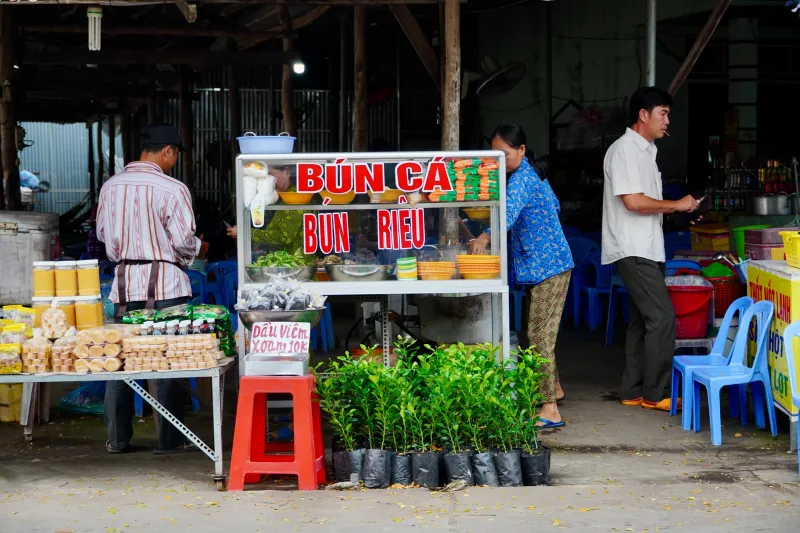
Take bánh mì. The Vietnamese sandwich — crusty baguette (a legacy of French colonialism), pâté, pickled daikon and carrots, cilantro, jalapeño, protein of various kinds — has been available in Vietnamese-American communities for decades. But it's recently crossed over into mainstream Gen Z food culture in a way that's notable for its specificity.
It's not just that young Americans want bánh mì. It's that they want correct bánh mì, and they've developed opinions about what that means through watching enough content from Vietnamese creators and Vietnamese-American food critics to know when something is off. The bread matters. The pickle-to-protein ratio matters. The quality of the pâté matters. A bánh mì served on the wrong bread — too soft, too thick — is not a bánh mì, and a Gen Z food person will tell you so without hesitation.
This level of specificity used to require either travel or deep community immersion. Now it requires a phone and enough curiosity to keep watching.
Okonomiyaki and the Joy of the Unfamiliar
Japanese okonomiyaki — a savory pancake made with cabbage, batter, and various fillings, topped with a specific sweet-savory sauce, Japanese mayo, bonito flakes, and dried seaweed — is not an obvious crossover hit. It's not visually dramatic in the way that a perfectly plated ramen bowl is. It doesn't have the clean, accessible flavor profile that made sushi palatable to American mass markets.
And yet okonomiyaki has developed a genuine following among young American home cooks, driven almost entirely by social media content. Part of the appeal is the DIY element — okonomiyaki is a dish that's traditionally customizable, and the home cooking versions that circulate on TikTok emphasize the flexibility and the relatively accessible ingredient list. But part of the appeal is also the specificity. Okonomiyaki is not Japanese food in a generic sense. It's Osaka food. It has regional variations. It has history. Learning to make it feels like learning something real.
This is the distinction that matters most to Gen Z food culture: real versus generic. Ghost kitchens were generic. Okonomiyaki is real.
Thai Boat Noodles and the Authenticity Hierarchy
Thai boat noodles (kuaitiao ruea) are a particularly interesting case because they're almost entirely unknown in mainstream American Thai restaurant culture. Most American Thai restaurants serve a relatively narrow menu shaped by decades of adaptation to local tastes — pad thai, green curry, tom yum. Boat noodles, with their intensely dark, complex broth (traditionally made with blood) and their small serving size meant to be ordered in multiples, are not on that menu.
But they're all over TikTok, served from the floating boats that give them their name or from street stalls in Bangkok. And young Americans who encounter this content don't see an exotic curiosity — they see something they want access to. The search for boat noodles in the US has led some Gen Z food seekers to Thai-owned restaurants in cities with larger Thai communities, to home cooking experiments, and to a broader curiosity about the gap between what American Thai restaurants serve and what Thai people actually eat.
That gap — and the willingness to be curious about it — is culturally significant.
Why Hole-in-the-Wall Beats Fusion Every Time Now
The expensive fusion restaurant used to be the aspirational dining experience for a certain kind of food-curious American. Chef-driven, highly conceptual, blending traditions in ways that required a long tasting menu to fully appreciate. Gen Z respects this, but it's not where their food enthusiasm lives.
What they're actually excited about is the opposite: the Vietnamese sandwich shop that's been in the same strip mall for 30 years, the Bangladeshi spot that only has eight items on the menu and is always packed with people from the community, the Salvadoran pupuseria where the tortillas are made by hand. These places represent the same thing that street food content represents: specificity, tradition, and a total lack of interest in performing accessibility for outsiders.
The irony is that this makes them more accessible to Gen Z, not less. A restaurant that's confident in its cultural identity is more interesting than one that's smoothed its edges to appeal to everyone.
Learning to Eat Is Learning to Listen
What's really happening here, underneath all the algorithm talk and the bánh mì opinions, is a form of cultural education. Watching hundreds of videos about a specific regional cuisine — seeing how it's made, who makes it, what it means to the people who grew up eating it — creates a kind of informed respect that's different from casual curiosity.
Gen Z food culture, at its best, is doing something that tourism often fails to do: it's paying attention. It's asking what something actually is before deciding what it should taste like. It's letting the food be from somewhere, rather than from everywhere and nowhere at once.
That's not a small thing. That's the whole thing.