The Recipe Stays in the Family: Why Southeast Asian Gen Z Is Done Sharing Their Best Dishes With the Internet
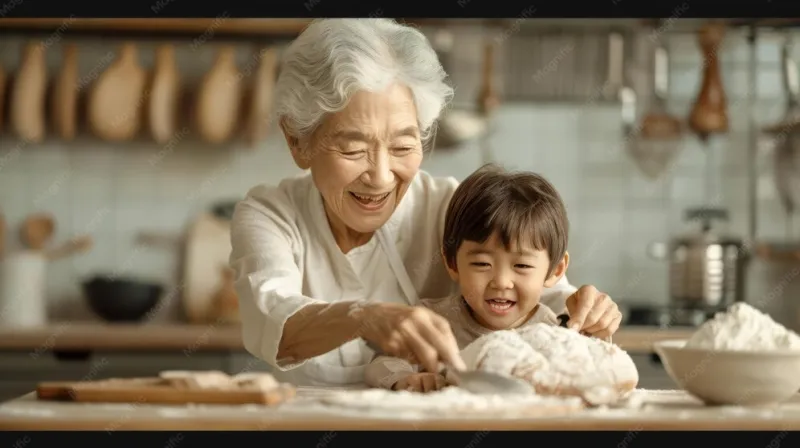
Photo: Thai grandmother teaching grandchild traditional cooking in home kitchen, via img.freepik.com
There's a version of this story that the internet already knows. A young woman films herself making her lola's sinigang. The video hits two million views. A food writer from Brooklyn calls it "revelatory." A meal kit company slides into her DMs. And just like that, something that lived quietly in a kitchen in Quezon City for three generations is now a $14.99 kit sitting in a Whole Foods cooler in Austin.
That version? A lot of Gen Z creators in Southeast Asia are actively working to make sure it never happens to them.
The Pressure to Perform "Authenticity"
For the past several years, Western food media has had a complicated love affair with the idea of "authentic" ethnic cuisine. The word gets tossed around like a compliment, but it often functions more like a demand — prove your realness, share your secrets, let us in. And social media made that pressure louder than ever.
For young Thai, Vietnamese, and Filipino creators, the ask is constant. Film your process. Explain every ingredient. Make it accessible. Make it shareable. Make it something a food blogger in Portland can recreate on a Sunday afternoon with ingredients from Trader Joe's.
But here's the thing a lot of those requests miss entirely: some recipes aren't meant to travel that way.
Twenty-two-year-old Nattawut, who runs a small cooking account from Chiang Mai, puts it plainly. He'll post videos of himself eating. He'll talk about the dishes he loves. But the curry paste his grandmother makes — the one that takes the better part of a morning and uses a combination of dried chilies he's never seen in any market outside his home province — that's not going online. "It's not about being secretive," he says. "It's that the recipe only makes sense inside our family. Without her, it doesn't exist the same way."
What Gets Lost in the Translation
When food goes viral, it usually gets simplified. That's not always cynical — it's just how the internet works. A dish that requires six hours, a specific clay pot, and years of muscle memory for knowing when the paste smells right doesn't translate cleanly into a two-minute video with on-screen text. So corners get cut. Substitutions get made. And somewhere in that process, the dish becomes something adjacent to what it actually is.
For a lot of Southeast Asian home cooks, that dilution isn't just annoying — it's a form of erasure. When a recipe gets stripped of its context, the culture that built it over generations quietly disappears from the frame. What's left is a flavor profile. An aesthetic. A trend.
Maisha, a 19-year-old Filipino-American creator based in Los Angeles, has watched this happen to dishes she grew up eating. "Kare-kare had a whole moment online," she says, referring to the slow-cooked oxtail stew that's been a cornerstone of Filipino celebration meals for as long as anyone can remember. "And I was happy people were discovering it. But then I started seeing versions with peanut butter from a jar and no bagoong and I was like — that's not the dish. That's a vibe inspired by the dish."
She's made the deliberate choice not to post her family's version. Not because she's protective in a competitive way, but because she doesn't think a comment section is the right place for it to live.
Gatekeeping as an Act of Care
The word "gatekeeping" has a bad reputation online. It usually conjures images of exclusion — someone deciding who's allowed to belong to a subculture, who's cool enough, who gets access. But what's happening in these kitchens is something different. It's closer to stewardship.
Nguyen Phuong Linh, a 24-year-old food blogger from Hanoi who has a modest but dedicated following, talks about her grandmother's bún bò Huế with a reverence that's almost architectural. Every element of the broth — the lemongrass, the shrimp paste, the specific cut of pork — exists in a precise relationship to everything else. "My grandmother doesn't measure anything," she says. "She knows. And I'm still learning. Sharing a half-learned recipe would be disrespectful to the dish."
That framing — that sharing something before you fully understand it does the food a disservice — runs counter to the internet's default mode of "post now, learn as you go." But it reflects a culinary tradition where knowledge is passed slowly, in person, through repetition and proximity. The recipe isn't just a list of ingredients. It's a relationship.
The Monetization Question
Of course, there's a financial dimension here that's hard to ignore. Food content pays. Brand deals, sponsored posts, cookbook deals — the pipeline from "viral recipe video" to actual income is real, and for young creators in countries where that kind of money represents genuine opportunity, the pressure to capitalize on heritage is not abstract.
Nattawut is aware of this tension. "I know people who've made good money sharing family recipes," he says. "I don't judge them. But I also know that once it's out there, you can't take it back. And I'm not sure I want to trade my grandmother's recipe for a partnership with a spice brand."
What's interesting is that many of these creators aren't anti-monetization broadly. They'll promote products they actually use. They'll talk about food culture in general terms. They've just drawn a line around the specific things that feel like they belong to someone other than themselves — to a family, to a region, to a history that predates their TikTok account by several decades.
Something the Algorithm Can't Replicate
There's a certain irony in the fact that the most compelling food stories might be the ones that never get told online. The dishes that remain stubbornly local, passed between people who love each other, untranslated and unoptimized — those are probably the ones that taste the best.
For American audiences who've grown up in a food culture that celebrates discovery and sharing, this might feel counterintuitive. We're used to the idea that good things should be spread around, that democratizing access to food is inherently positive. And often it is.
But there's something worth sitting with in the idea that not every tradition needs to be exported. That some recipes are doing exactly what they're supposed to do by staying exactly where they are — in a kitchen in Chiang Mai, or a house in Hanoi, or an apartment in Manila where someone's grandmother is making something that will never trend, and is more powerful for it.
The internet will keep asking. And a growing number of young Southeast Asian creators have quietly decided: the answer is no. The recipe stays in the family. And that's not gatekeeping. That's love.