One Reception, Three Continents: Inside America's Wonderfully Chaotic Multicultural Wedding
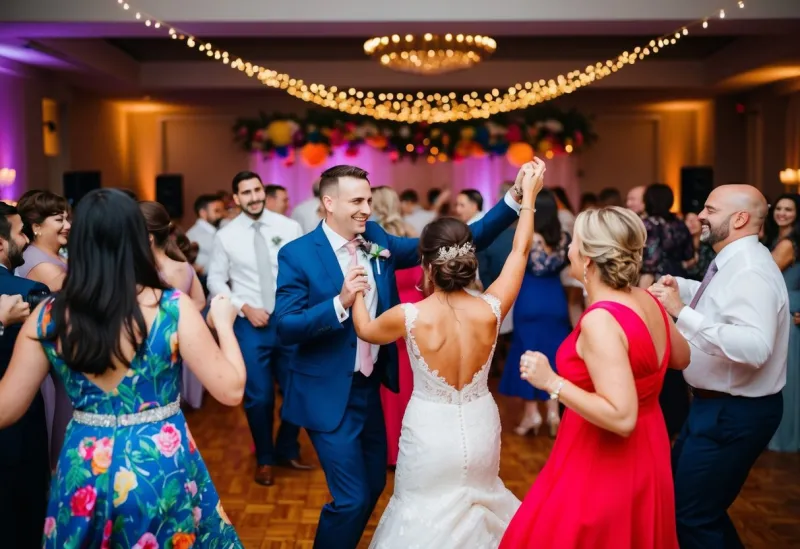
Photo: colorful multicultural wedding reception dancing guests celebration, via koala.sh
Somewhere in New Jersey last fall, a wedding happened that contained the following, in order: a traditional Korean paebaek ceremony with dates and chestnuts tossed at the bride's skirt, a Mexican la víbora de la mar conga line that nearly took out a great-aunt, and a Nigerian money spray that turned the dance floor into a scene somewhere between a rainstorm and a stock ticker.
The couple wouldn't have had it any other way. Neither would I, and I was just there for the cake.
The Paebaek: Bowing, Dates, and Mild Panic
If you've never seen a paebaek, it's the Korean wedding tradition where the couple, in full hanbok, formally greet the bride's family — bowing deeply, receiving symbolic foods, and listening as the parents hurl dates and chestnuts into the bride's garment. The number that lands, tradition says, predicts the number of children. It is dignified, moving, and quietly hilarious, especially when the groom's attempt at a full bow resembles a folding chair giving up.
At blended weddings, the paebaek often becomes the emotional anchor of the afternoon — the moment when grandparents who don't share a language with half the guest list are suddenly, unmistakably, the main characters.
The Money Spray: Generosity as Performance Art
Then the Nigerians take over. Money spraying — dancing up to the couple and showering them with bills, often with a personal DJ hype-man announcing family members by name — is not tipping. It's a public declaration: this union is so blessed that money literally falls on it. Nigerian-American couples often hire a professional money sprayer or assign a trusted uncle to the task, because there is technique involved and you do not want an amateur out there.
American venues, for the record, are still adjusting. Some have policies about throwing money. The good ones learn.
La Víbora de la Mar and the Limo
The Mexican contributions bring their own chaos. La víbora de la mar — the 'sea serpent' — is a conga-style line where guests snake under an arch of the couple's joined hands, usually to a live brass band, usually faster than anyone planned. And yes, the stretch limo remains a beloved Mexican-American wedding staple, polished to a mirror shine and often the bride's favorite photo backdrop.
The Negotiations Nobody Instagrams
Here's what the wedding blogs don't show you: none of this happens without diplomacy. Whose tradition anchors the ceremony? Whose grandmother speaks first, and for how long? Does the paebaek happen before the church service or after? Who's offended if the money spray gets capped at two songs?
Couples describe these negotiations as the first real stress test of married life — deciding, meal by meal and ritual by ritual, what their new family actually is. Some traditions get merged. Some get scheduled into separate events. Some get lovingly retired, with apologies. Every decision is a tiny act of identity authorship.
Why This Is the Most American Wedding There Is
There's a version of 'traditional American wedding' that's really just a default setting — white dress, DJ, chicken or fish. But the multicultural wedding refuses the default. It says: we are made of specific things, from specific places, and we refuse to sand them down for a venue coordinator's timeline.
That's not a trend. That's the country, at a reception, being honest about itself. Most American families are already blended — by immigration, by marriage, by history. The multi-tradition wedding just stops pretending otherwise.
And honestly? When the serpent line hits the money spray and the DJ drops cumbia into afrobeats without missing a beat, there's no ceremony on earth that captures the American experience more accurately.
The chestnuts landed. The bills flew. The great-aunt recovered. Ten out of ten. No notes.