Lentils in Your Wallet, a Coin in Your Shoe: A Field Guide to Buying Luck Around the World
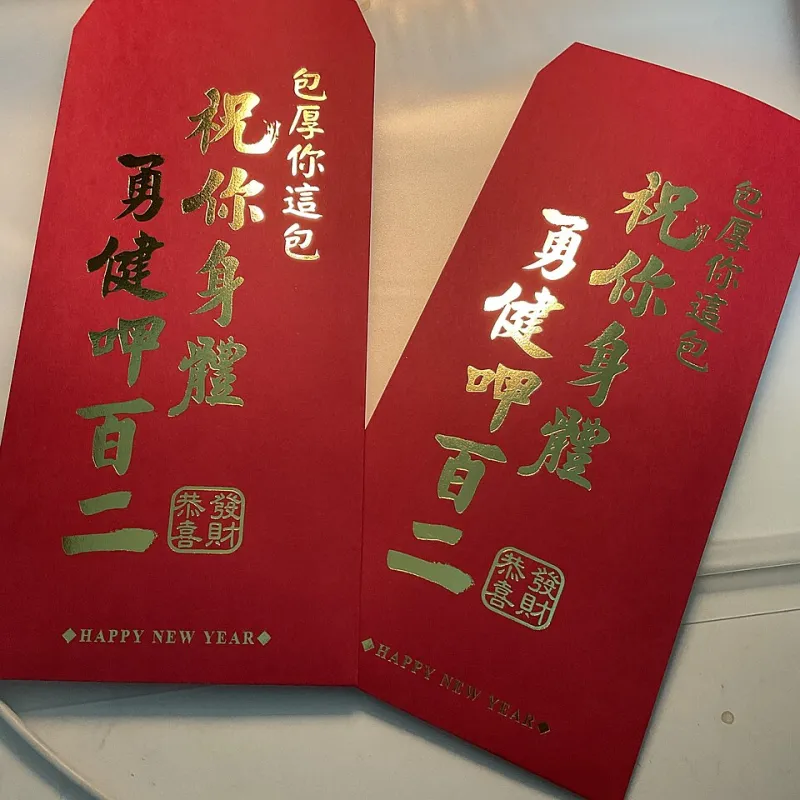
Photo: AH-LOD, CC BY-SA 4.0, via Wikimedia Commons
There is a very old, very human instinct that says money is not enough. You can earn it, save it, budget it into six categories, and still feel like the year owes you a small favor. So you do something slightly irrational — you fold a dollar into a red envelope, you tuck a coin into a shoe, you count out twelve grapes — and you call it tradition.
Every culture on earth has a version of this. Not because anyone actually believes a lentil is a financial instrument, but because hope needs a physical object to hold onto. Here are the ones worth knowing — and yes, worth borrowing.
Red Envelopes and the Year of the Horse
The most famous money-luck ritual in the world is also the most straightforward. Chinese hongbao — red envelopes packed with crisp bills — get handed out at Lunar New Year by married adults to kids, younger relatives, and unmarried friends. Red carries luck. Even numbers are encouraged. Eight is considered auspicious, four is avoided because it sounds like the word for death, and money is typically given in brand-new notes because creased bills suggest a stale year.
February 17, 2026, brings in the Year of the Horse, and with it a fresh wave of envelopes — including the digital ones that have been flying around Chinese messaging apps for well over a decade now. The tradition survived the transition to phones because the physical gesture was never really about the paper. It was about the handoff.
Buying Luck Blind
Japan's contribution to the genre is fukubukuro — mystery bags sold by retailers during the first days of January. The contents are unknown, the value is guaranteed to exceed the price, and the whole thing functions as a national exercise in optimism.
It is a gamble, but it is a polite one. The store promises you will not regret it. You promise not to open the bag in public. Everyone wins, at least narratively.
Japan has an enormous catalog of adjacent luck infrastructure — maneki-neko cats with raised paws, omamori charms sold at shrines, and lucky bamboo, where the stalk count is supposed to mean something: three for past, present, future happiness; five for all five areas of life; the famously overachieving twenty-one for potent blessings.
Coins, Shoes, and Round Fruit
In the Philippines, New Year's Eve involves a table of twelve round fruits — one for each month — because round shapes suggest coins and coins suggest money. Families keep coins in their pockets or shoes and jingle them at midnight. Kids jump so they'll grow taller. The whole night is a load-bearing wall of tiny superstitions, and nearly everyone participates anyway.
Variations on the coin-in-the-shoe idea show up across Latin America and the diaspora, usually paired with yellow clothing for prosperity, or the practice of walking around the block with a suitcase to invite travel in the coming year.
Lentils, Grapes, and Yellow Underwear
Italy's New Year's table leans hard on lenticchie — lentils cooked with sausage, eaten at midnight because lentils are coin-shaped and cheap and therefore symbolic of both money and thrift. Colombia pairs lentils with yellow underwear and a handful of them stuffed in a pocket. Brazil has its own lentil soup, and its own version of the wardrobe theory.
Spain and much of Latin America run on the twelve grapes: one per chime at midnight, eaten fast, half-choked on, absolutely mandatory. Greece hides a coin in a New Year's vasilopita bread, and whoever gets the slice with the coin is the year's blessed one.
None of these traditions are expensive. That is not an accident. Most money-luck rituals are deliberately cheap, because the people who observe them the most devoutly have never been the ones with cash to spare.
Why Gen Z Keeps Cashing In
Say this for the generation currently staring down rent, student loans, and a job market that keeps redefining itself: they are not too cool to participate. Coins in shoes, a single lucky candle, a dollar bill folded into an envelope and tucked into a wallet, a lucky bamboo on a windowsill that has somehow survived three moves — these are cheap hope, and cheap hope is a rational purchase right now.
There's a whole layer of this on the internet, too: manifestations, lucky-girl content, the sort of manifesting routines that treat a morning journal entry like a hedge fund. Some of it is content. Some of it works because it forces a person to behave like someone expecting good things.
And a counterfeit-adjacent economy has grown up around it. Lucky charms get resold at a markup. Feng shui consultants have TikTok accounts. That's the moment where a nice tradition becomes a $79 subscription you did not need.
The Fine Print on Luck
Nobody who practices any of this thinks a lentil is going to pay their electric bill. The ritual is not a transaction with the universe. It is a way of marking time with other people — sitting at a table at midnight, eating something round, handing a red envelope to a kid who is going to spend it on something stupid immediately.
So if you want to try one this year: skip the online store. Make the lentil soup. Buy the round fruit. Put a quarter in your shoe, jingle it, and take it out before you walk anywhere.
The luck, such as it is, is in the ritual. But read this before you blame us — we're culturally informed, not financial advisors.