Your Skin Called — It Wants You to Stop Doing So Much to It
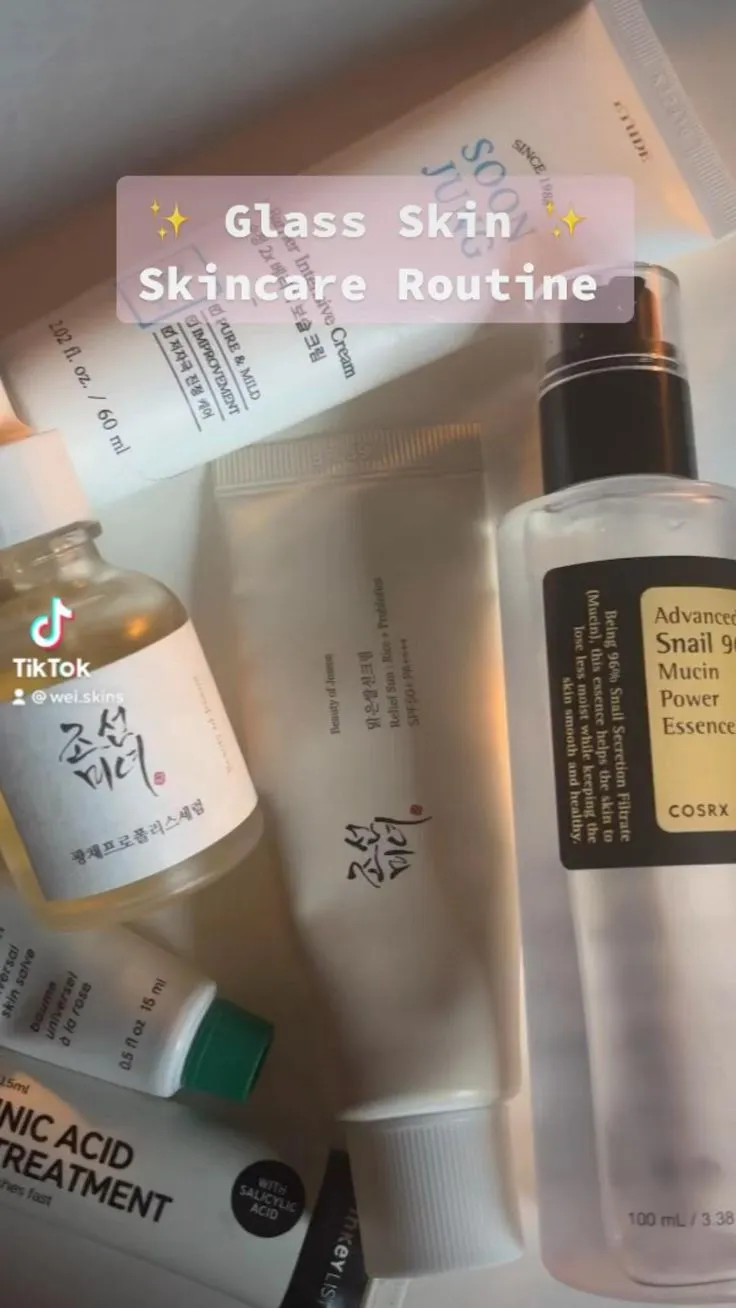
Photo: Korean skincare minimalist routine glass skin products flatlay, via i.pinimg.com
Let's be honest. The average American skincare routine has become a little unhinged. Between the retinol, the AHAs, the BHAs, the vitamin C serums, the niacinamide, and the four-step moisturizing process that somehow still ends with dry patches — we've collectively convinced ourselves that more product equals better skin. Spoiler: it doesn't. And Korean beauty culture has been trying to tell us that for decades.
K-beauty has had a serious moment in the US over the past few years, but somewhere between the viral TikTok hauls and the Sephora endcaps, we missed the actual philosophy behind it. It's not about buying more stuff. It's almost the opposite.
Where the Whole Thing Started
To understand K-beauty, you have to understand the cultural context it grew out of. In South Korea, skincare isn't a trend — it's generational. Grandmothers pass down routines the way American grandmothers pass down recipes. Skin health is considered a long-term investment, not a quick fix, and that mindset is baked into everything from product formulation to how Koreans talk about beauty in everyday conversation.
Dr. Jiyoung Park, a Seoul-based dermatologist who consults for several Korean cosmetic brands, explains it this way: "In Korean culture, we say 피부가 재산이다 — 'your skin is your wealth.' The goal was never transformation. It was preservation. You protect what you have rather than trying to fix what you've broken."
That philosophy gave rise to the famous 10-step routine, which — despite what Instagram made you think — was never meant to be performed all at once, every single day. It's a menu, not a mandate. You pick what your skin needs that day. Some mornings it's three steps. Some evenings it's seven. The point is attentiveness, not volume.
The "Skin First, Makeup Second" Shift
Here in the US, makeup culture has historically been the star of the show. Foundation, concealer, contour — we've built entire identities around the idea that makeup is the destination. Korean beauty flips that entirely. The goal of a K-beauty routine is skin so healthy, so balanced, that makeup becomes optional. Not unnecessary — just optional.
This is where Gen Z is catching on in a major way. According to a 2023 report from Mintel, nearly 60% of American Gen Z consumers said they'd reduced the number of makeup products they use in the past two years, with many citing skin health as the reason. The "no-makeup makeup" look that's been dominating feeds? That's not laziness. That's K-beauty philosophy in action.
Lila Chen, a 24-year-old aesthetician based in Los Angeles who specializes in Asian skincare techniques, has seen the shift firsthand in her clientele. "A lot of my clients come in wanting to 'fix' their skin with more product. My job is usually to convince them to use less," she says. "Once they start treating their skin barrier like something worth protecting instead of something to fight against, everything changes."
What Actually Works (And What's Just the Hype)
Okay, let's get into it — because not everything under the K-beauty umbrella is created equal, and some of it is absolutely marketing dressed up in pretty packaging.
What delivers real results:
- Essence and hydration layering. The idea of applying thin, watery layers of hydration before heavier moisturizers genuinely helps with absorption and skin plumpness. This isn't magic — it's basic skin science that Western routines often skip.
- Double cleansing. An oil-based cleanser followed by a water-based one is legitimately effective at removing sunscreen and makeup without stripping the skin. American cleansers tend to be more aggressive, which disrupts the skin barrier over time.
- SPF as a non-negotiable. Korean sunscreen formulas — lighter, less greasy, more wearable — have pushed American consumers to actually use SPF daily. That alone is a public health win.
- Centella Asiatica (Cica). This plant-based ingredient has serious evidence behind it for calming inflammation and supporting barrier repair. It's not a trend — it's a workhorse.
Where the hype outpaces the results:
- Snail mucin for everyone. It's not bad, but it's not the universal miracle it's been sold as. For some skin types, it genuinely helps with hydration and healing. For others, it's just a textured moisturizer with a good story.
- 10 steps as a rigid system. If you're layering 10 products every single day regardless of what your skin is doing, you've missed the entire point. More steps don't equal more results — they can actually cause more irritation.
- "Glass skin" as the goal. This one's worth unpacking culturally. Glass skin — that ultra-dewy, reflective look — is a specific aesthetic that works beautifully for some skin types and climates. But chasing it as a universal ideal can lead people to over-moisturize or layer products their skin doesn't need.
The Bigger Conversation About Self-Care
There's something culturally significant happening here that goes beyond skincare. The K-beauty philosophy — patient, attentive, low-intervention — runs counter to so much of how Americans are conditioned to approach self-improvement. We want fast results. We want the product that does it all. We want to buy our way to a solution.
K-beauty asks you to slow down and actually pay attention to your skin on a given day, in a given season, at a given age. That kind of self-awareness is a practice, not a purchase.
Lila Chen puts it bluntly: "The most radical thing K-beauty has done for my American clients is teach them that their skin isn't broken. It just needs to be listened to."
That's not a product pitch. That's almost a philosophy of care — one that, frankly, a lot of us could apply well beyond our bathroom shelves.
So What Do You Actually Do With This?
If you're ready to stop overwhelming your skin and start working with it, here's the stripped-down version of what K-beauty actually recommends:
- Protect your barrier first. If your skin is constantly red, tight, or reacting to everything, you've probably damaged your barrier. Dial everything back — fragrance-free, gentle, minimal.
- Hydration before moisture. Essences and toners go on damp skin before your heavier creams. Let each layer sink in.
- SPF every morning. No exceptions. Find a Korean sunscreen if you hate the white cast of Western formulas — the texture game is genuinely better.
- Add actives slowly. One new product at a time, introduced over weeks — not days.
- Listen to what your skin is doing today. Not what it did last week. Not what your favorite influencer's skin does.
The Western beauty industry has made billions convincing us that skin is a problem to be solved. K-beauty culture — at its core, before the marketing got hold of it — suggests something quieter and more sustainable: that skin is something to be understood.
And honestly? After years of 12-product routines that left half of us with reactive, confused skin, that sounds pretty revolutionary.